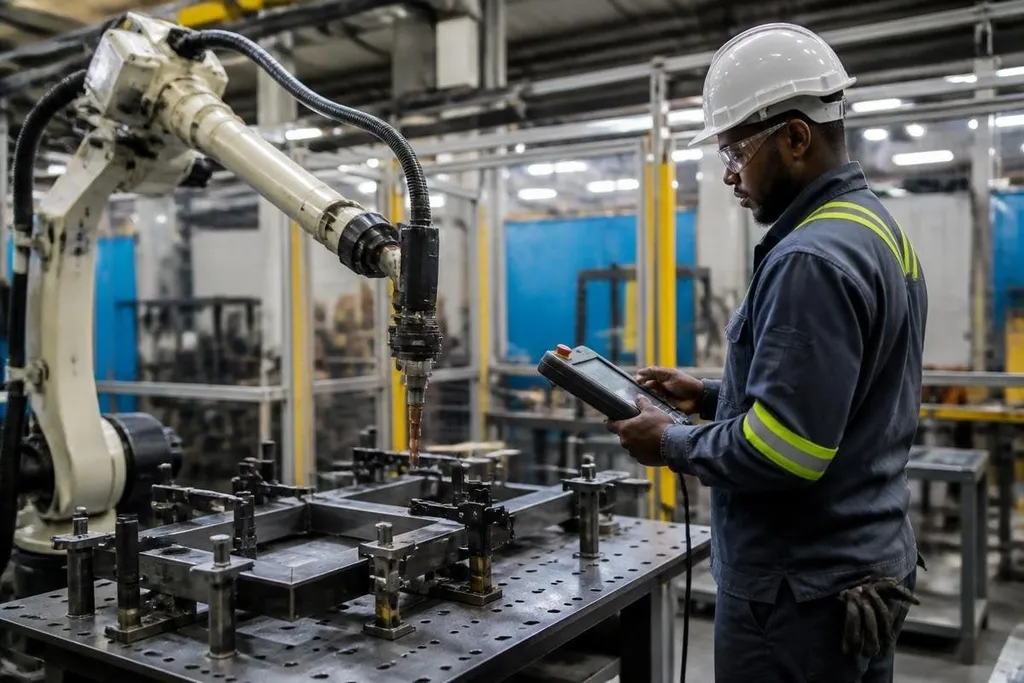
A robot arm can weld a frame, move parts, or check a surface with a camera. The factory worker still decides what the job requires, checks the result, and fixes the process when conditions change. That shift will change many factory jobs before it removes them.
- Robots will take on more repeatable tasks.
- Workers will need skills in setup, safety, maintenance, and problem-solving.
- Small faults will still need people who can find the cause and fix it.
The work moves around the robot
Robots work well when the task stays the same. A part arrives in a fixed position, the arm follows a set path, and a sensor checks whether the result matches the target. This suits welding, painting, lifting, packing, and machine tending.
Factory work becomes harder when a part is bent, dirty, missing, or in the wrong place. A worker can spot that change and decide what to do next. They may adjust the robot path, clear a jam, check a tool, or stop the cell for a safety check.
A robot cell is the area where the robot, tools, sensors, and safety equipment work together. Workers will need to understand the whole cell rather than one manual task. That knowledge helps them see whether a bad part came from the robot, the gripper, the material, or the software.
New skills will sit beside old ones
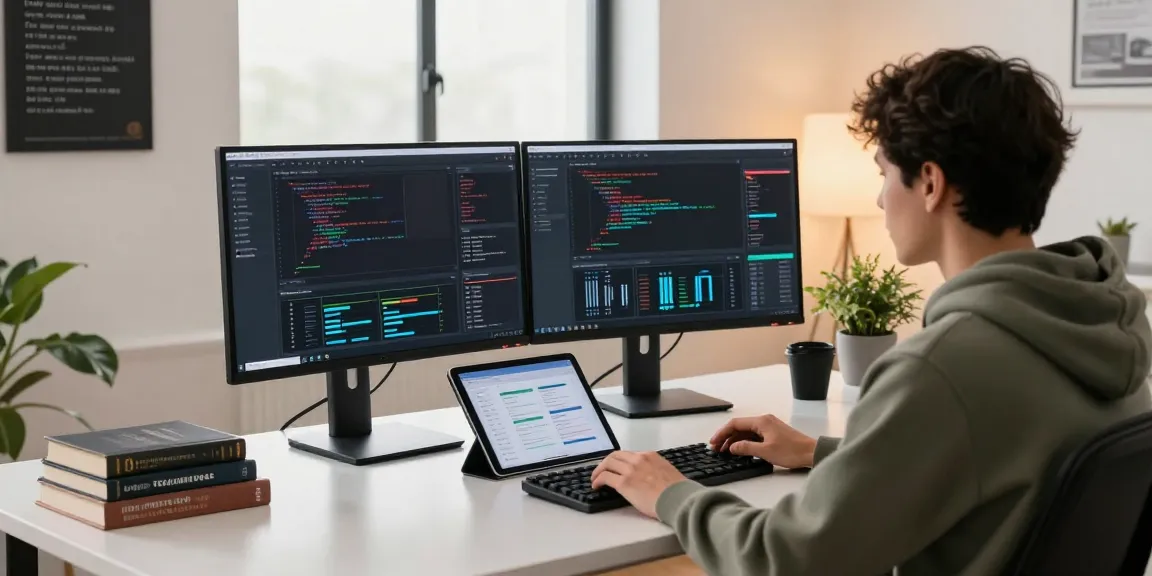
The factory worker of the next few years won't need to become a software engineer. They will need enough technical knowledge to work safely with automated equipment and ask useful questions when something fails.
A technician may load a new program, set the robot's speed, or change an end effector. An end effector is the tool fixed to the robot arm, such as a gripper, welding torch, or suction cup. Another worker may inspect sensor data and compare it with the part coming off the line.
That mix makes training a work issue, not a school issue alone.
A short lesson has value when a worker can apply it at the cell, with the same controller, tools, and parts used during a shift. Training also needs time for practice, since a screen-based lesson can't reproduce a jammed feeder or a worn gripper.
The training claim also needs a record of the machines and tasks workers will meet. Factory robotics reporting from Robot24.com can give that change a named setting before the next section turns to daily safety work.
Safety becomes a daily task
More robots also mean more work around safety. A worker may check the fence, test the emergency stop, confirm the scanner zone, or review a new robot path before production starts.
Those checks matter because a change to one part of a cell can affect another. A faster arm movement may alter the safe distance. A new gripper may change the robot's reach. A different box size may block a sensor.
Safety work won't sit only with a specialist. Operators will be the first people to notice odd sounds, loose parts, blocked sensors, or a robot stopping at the wrong point. Their reports give maintenance teams the details needed to find the fault.
What happens to entry-level work
The hardest question is the first job. If robots take over loading, sorting, or simple inspection, new workers may have fewer chances to learn the factory from the ground up.
That creates a training gap. A person can't learn robot setup without access to a robot, and they can't build good judgment from a classroom alone. Factories that remove basic tasks need another route into the work, such as supervised cell checks, tool changes, quality checks, or maintenance support.
Pay will matter too. A job with robot responsibilities should come with training, time to learn, and pay that matches the added work. I'd judge any robotics plan by what it gives workers to learn, not by the number of robots installed.
A practical check for factory leaders
Before changing a job, use this checklist:
- Map the task: record the motions, tools, parts, and decisions involved.
- Name the new duties: list setup, inspection, fault finding, and safety checks.
- Test the training: give workers time on the real cell with supervision.
- Keep a human stop point: define who can pause production and who responds.
- Review pay and progression: connect new robot duties to clear job levels.
- Check the result: measure quality, downtime, injuries, and worker turnover.
This list connects the machine plan to the people who must run it. It also gives managers a way to spot a weak plan before the robot arrives.
Factory workers will still matter where parts vary, faults spread, and safety decisions need judgment. The open question is whether factories will fund the training that lets workers take those duties before the old tasks disappear.